It’s been a hot minute…or six months…but still! I could explain why I haven’t blogged in six months in great detail, but I will summarize it in 3 sentences. I was sick all of January and then again in February with Covid and the flu. March and April were mental health valleys and I questioned a LOT about being a teacher. I was almost septic in May from an untreated kidney infection and the last 3 weeks have been about mental and physical wellness and recovery. There. I think that just about covers it all.
There were a lot of times over the last few months that I wanted to get online and write but every time that I did it felt so negative and I like to maintain some sort of professionalism in this space. I am SO happy to be back and finally feel like I have something fun to share! So, here we go!
Last month, my sister came to visit me in Columbus and her one request was to go to COSI (Center of Science and Industry). Sarah and I hadn’t been there together since we were kids when my parents took us there for a surprise weekend trip. A lot has changed at COSI but a lot has also stayed the same which really triggered our nostalgia as we reminisced about building a water pipe out of QVC pipes and finding energy vampires in our house. As a Spanish teacher, I was PUMPED at the language updates made to the museum.
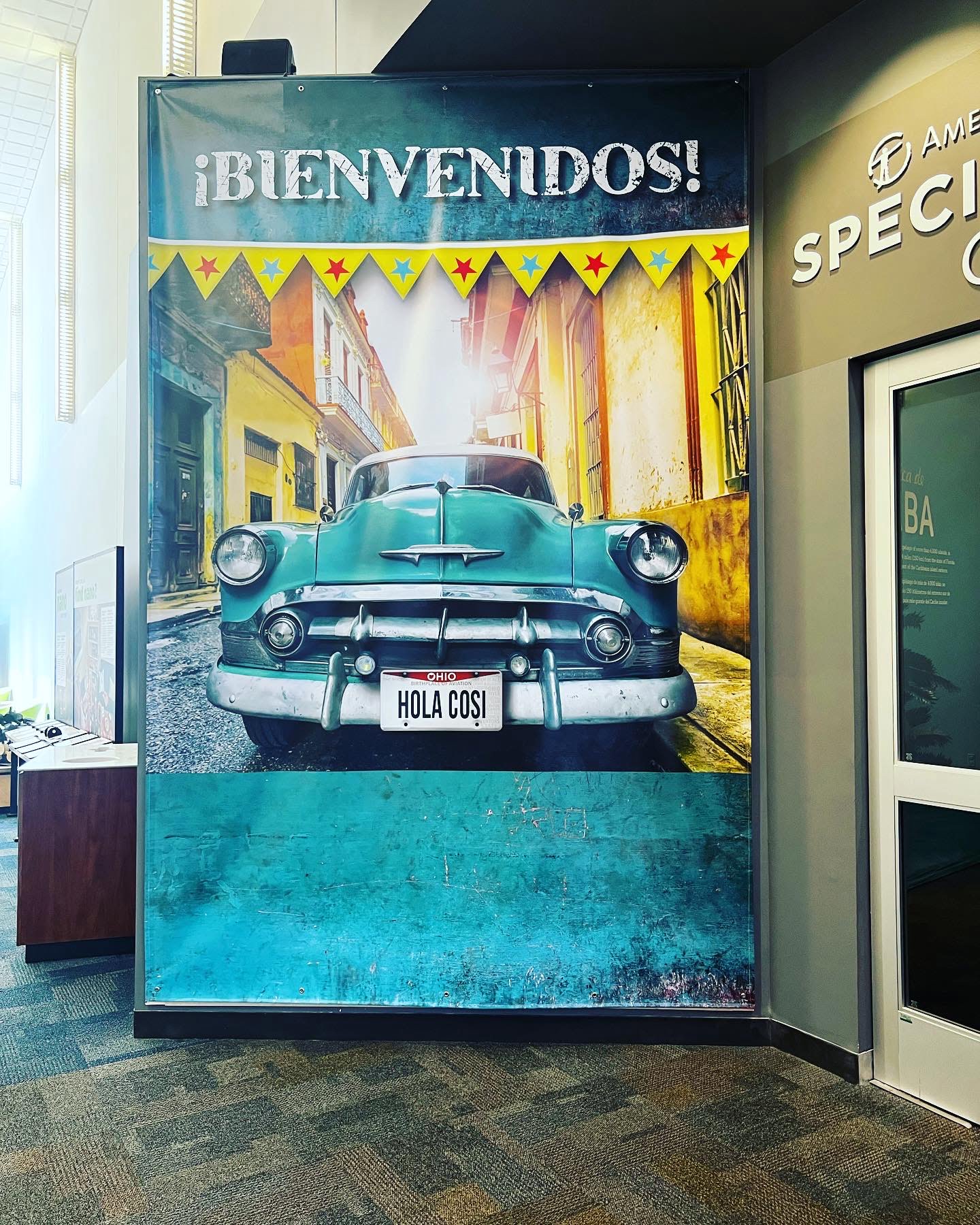
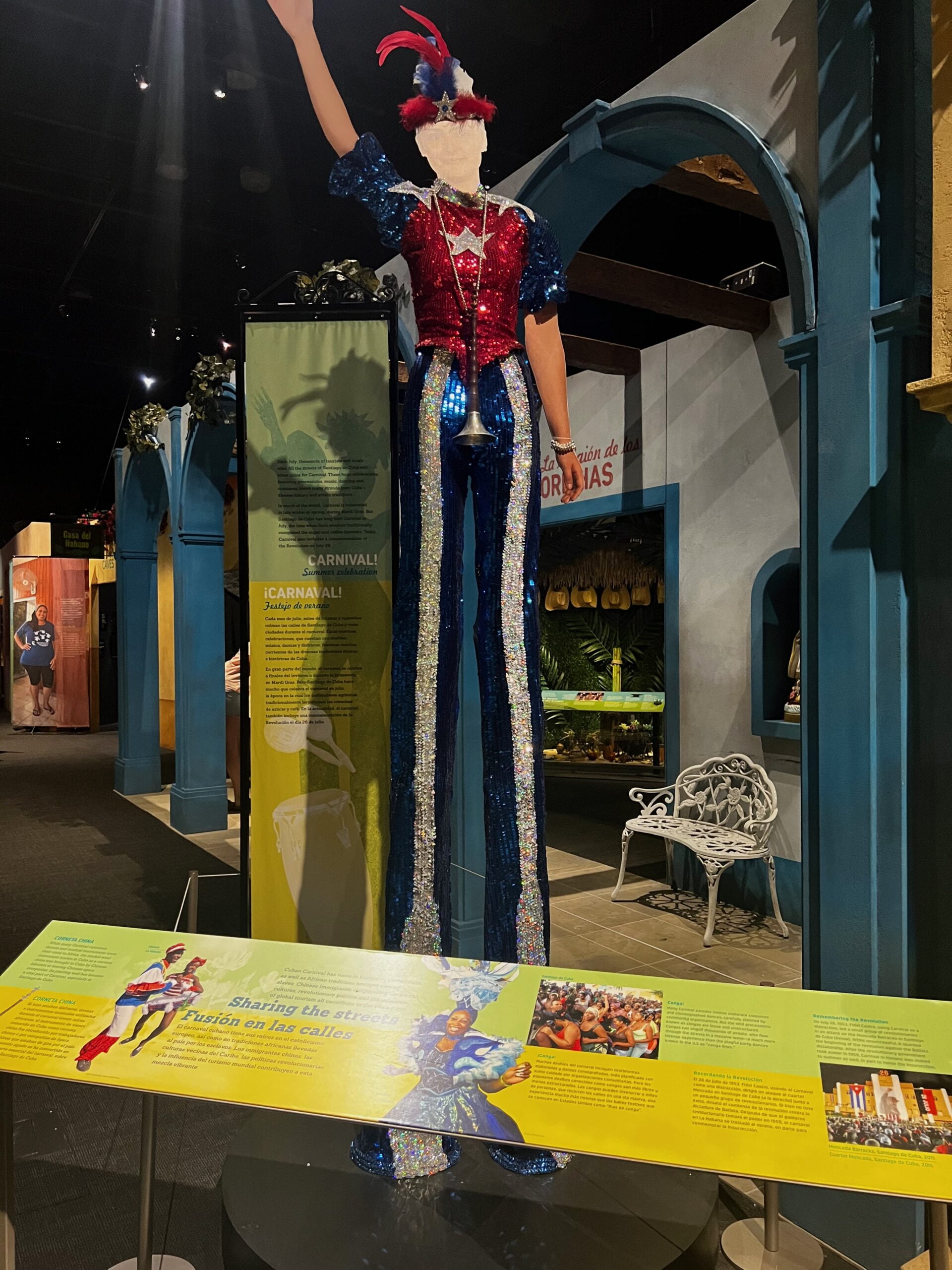
First, we went to the Cuba exhibit which is a traveling exhibit from the American Museum of Natural History. During the pandemic, COSI was scheduled to have this exhibit but for obvious reasons, it was closed. COSI created a webpage that explained a bit more about the exhibit and there is a video from one of the co-curators explaining a bit more about it that you can watch here ( it is in all Spanish!!)

The Cuba Exhibit was fantastic. I loved seeing the art work displayed and real authentic materials being used throughout the exhibit. The exhibit talked about Cuba’s incredible biodiversity, products, and included real stories from real Cubans. Visually, the exhibit really drawed you in and was really well done. I highly recommend visiting before labor day (the last day it is at COSI). Click through the gallery below to get a bit of the experience for yourself!
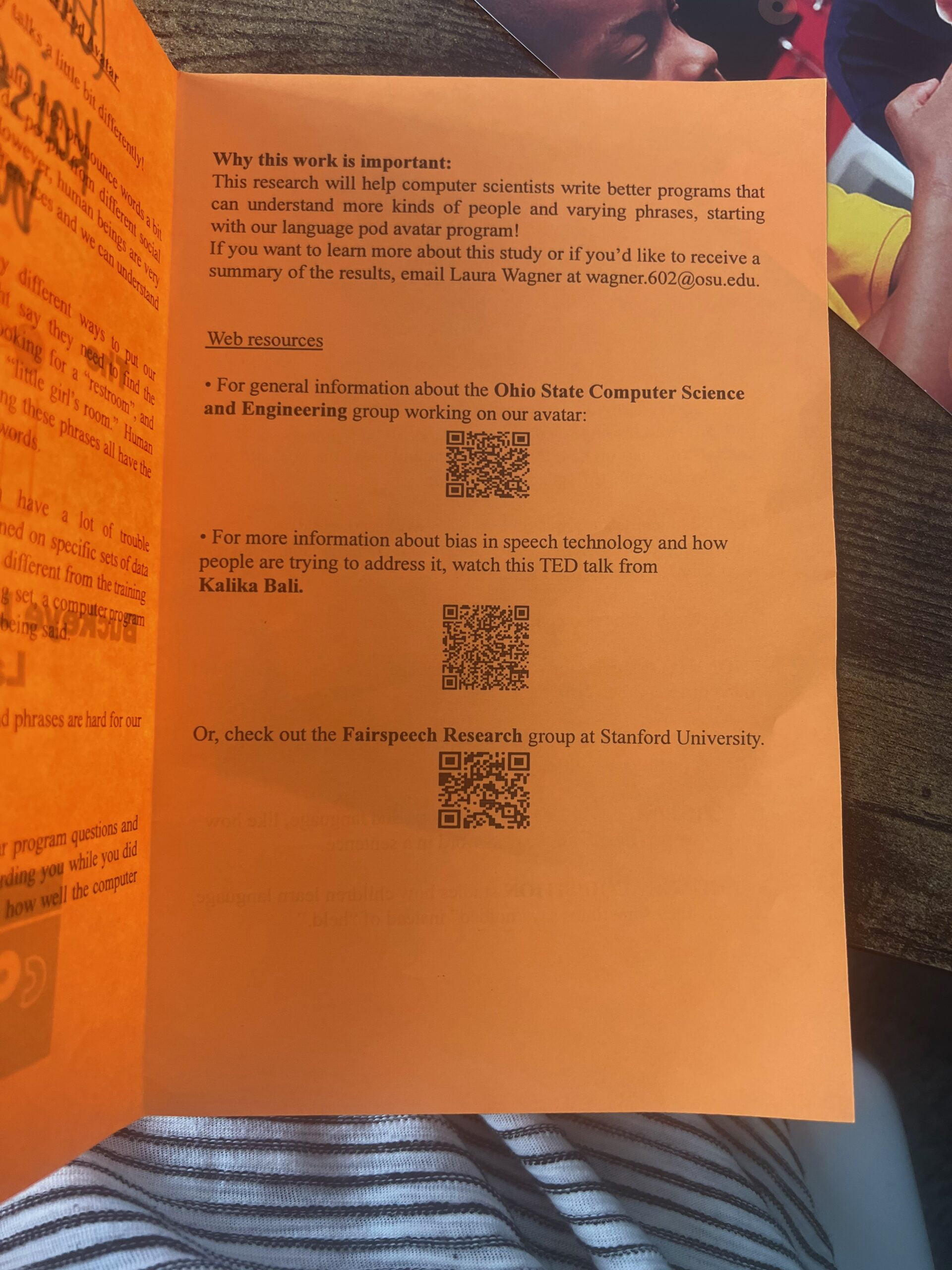
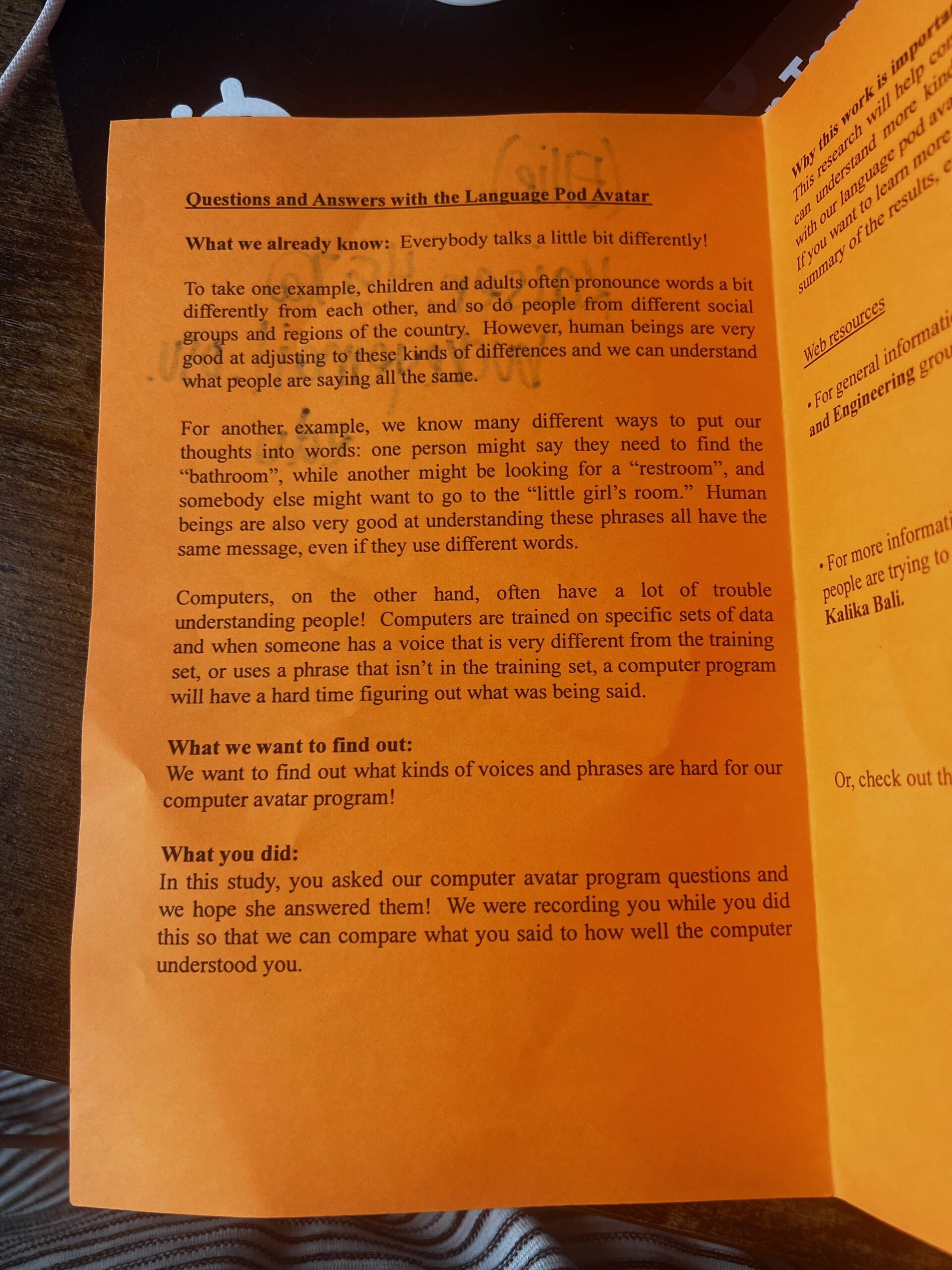
As we made our way to the Life exhibit, I was stopped by a researcher who was working with an AI machine (artificial intelligence) that worked similar to Siri. She asked me if I was interested in helping out with the research by interacting with the AI and asking questions about learning languages. I was definitely in the right place at the right time!!! I shared with the researcher that I was a Spanish teacher and very passionate about language acquisition. I asked questions about Google translate, language acquisition, linguistics, etc and was so impressed on how the AI answered everything. The AI earned my trust after her fantastic answer about why translators are not trustworthy! For now, the AI is able to answer questions in English but their hope is that “she” learns more and more and can answer in other languages.
Upon further investigation, I learned that The Ohio State University has something called The Buckeye Language Network that supports “The Language Pod” at COSI. From their website:
“Within the pod, Ohio State research teams conduct studies on various dimensions of language knowledge, and collect, code, and analyze data within the pod. Visitors to COSI are able to see real research being conducted, and also have the opportunity to participate in these studies themselves. Outside the pod, Ohio State graduate and undergraduate students provide educational explanations to both the adult and child COSI visitors about the work being conducted within the pod. These explanations address the research process on several levels, including the research content (What problem is this researcher studying?), the research methods (How is this researcher doing her study?), the larger research goal (Why is this researcher studying this part of language?), as well as the scientific method more generally (How do we ask and answer a question scientifically?). These students also explain the fundamentals of the science of language to visitors through a variety of short demonstrations, each focusing on a different sub-field of linguistics.”
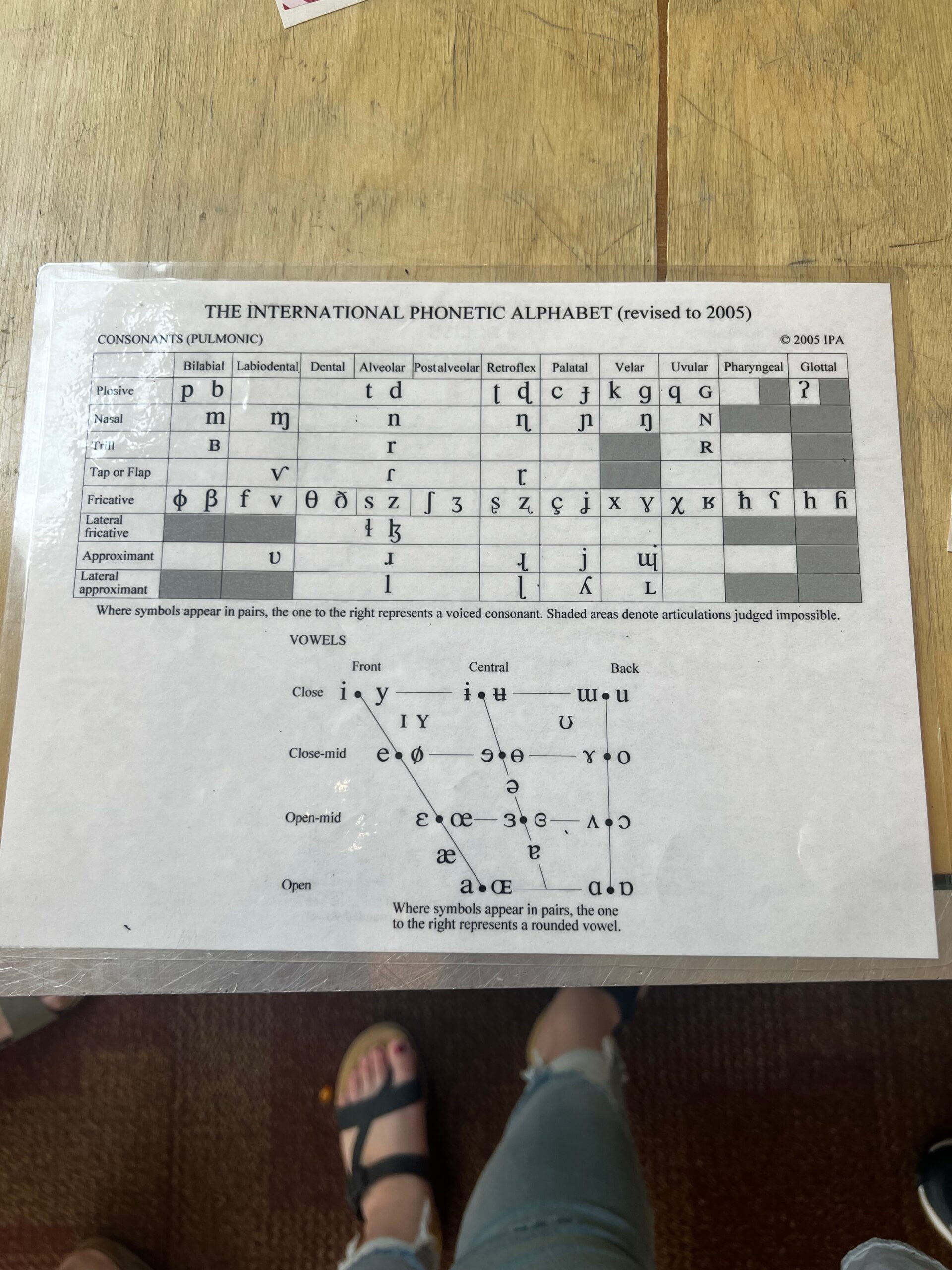
It was incredible to see the research happening in real time. Outside of the pod, I met researcher Ellie Kiser who was doing a demonstration of the International Phonetic Alphabet. I really wish they had a crash course in linguistics to offer at COSI because it was my LEAST FAVORITE course I ever had to take in college and I slightly regret not paying attention more.
To end our experience, we went to the Space exhibit which was the only exhibit (besides Cuba) to have bilingual signs across the entire exhibit. Their activities and directions were given in both langauges which is really helpful because there is a high Spanish speaking population in our area. I really hope COSI updates the rest of the museum to have this. Another suggestion is to have audio devices for all of their exhibits in other popular languages in our area. I was also surprised that braille text was not around the museum more and from what I found online, it is not an accommodation currently.

If you are ever in the Columbus area, I highly encourage a trip to COSI with or without kids! I am really considering inquiring about a field trip to COSI when we get back in the fall before the CUBA exhibit happens. It would be a really fun experience and I already brainstormed a fantastic language scavenger hunt experience for all levels!
Lastly, I hope to see everyone at OFLA this upcoming July! I am presenting Literacy in Languages: Incorporating Workshop Strategies into the World Language Classroom on Tuesday, July 26th at 11:00am! It is my first in person conference in almost 4 years and I am PUMPED. See you soon 🙂